
November 2025 Newsletter

New State Energy Strategy Charts a Course for Oregon's Energy Future
The Oregon Department of Energy is pleased to present the Oregon Energy Strategy, a first-of-its-kind report that identifies pathways, policies, and recommended actions Oregon can take to meet the state’s clean energy policy objectives while addressing energy affordability and reliability.
As directed by Oregon House Bill 3630 (2023), ODOE developed the energy strategy with support and engagement from Tribes, peer agencies and organizations, energy partners, community groups, and the public. It identifies five pathways to achieve energy policy objectives; evaluates the benefits and challenges of those pathways; and considers how different choices can affect energy costs for Oregon households, air quality and public health, and jobs and the economy.
The five pathways are Energy Efficiency, Clean Electricity, Electrification, Low-Carbon Fuels, and Resilience. Alongside each pathway in the report are policy recommendations for Oregon decisionmakers and implementers to consider. With insights from public engagement, ODOE developed a set of potential legislative and policy actions Oregon can take in the near term, such as supporting current or creating new energy programs, aligning efforts across state agencies, focusing on energy burden and environmental justice, and more.
Development of the energy strategy wouldn’t have been possible without the expertise and support of partners and community members. Over the last two years, ODOE has convened an Interagency Steering Group, Advisory Group, and several Working Groups to help inform and provide feedback on the development of the report. ODOE hosted information and listening sessions, and has accepted public comment throughout the development process, including on an August 2025 draft strategy.
The Oregon Energy Strategy in its entirety, as well as a summary version, supporting documents, public comments, modeling information, and more from the development process are available on ODOE’s website. The agency will continue to develop useful documents, guides, and tools.
ODOE has also created a dedicated Oregon Energy Strategy website that will share updates and track progress on policies and actions: https://energystrategy.oregon.gov/
Oregonians are welcome to provide further feedback on the strategy or request a presentation: https://odoe.powerappsportals.us/en-US/energy-strategy/
Save the Date! ODOE will host a webinar to walk through the new Oregon Energy Strategy on December 17, 2025. More information, including how to log in, will be available on ODOE's website.
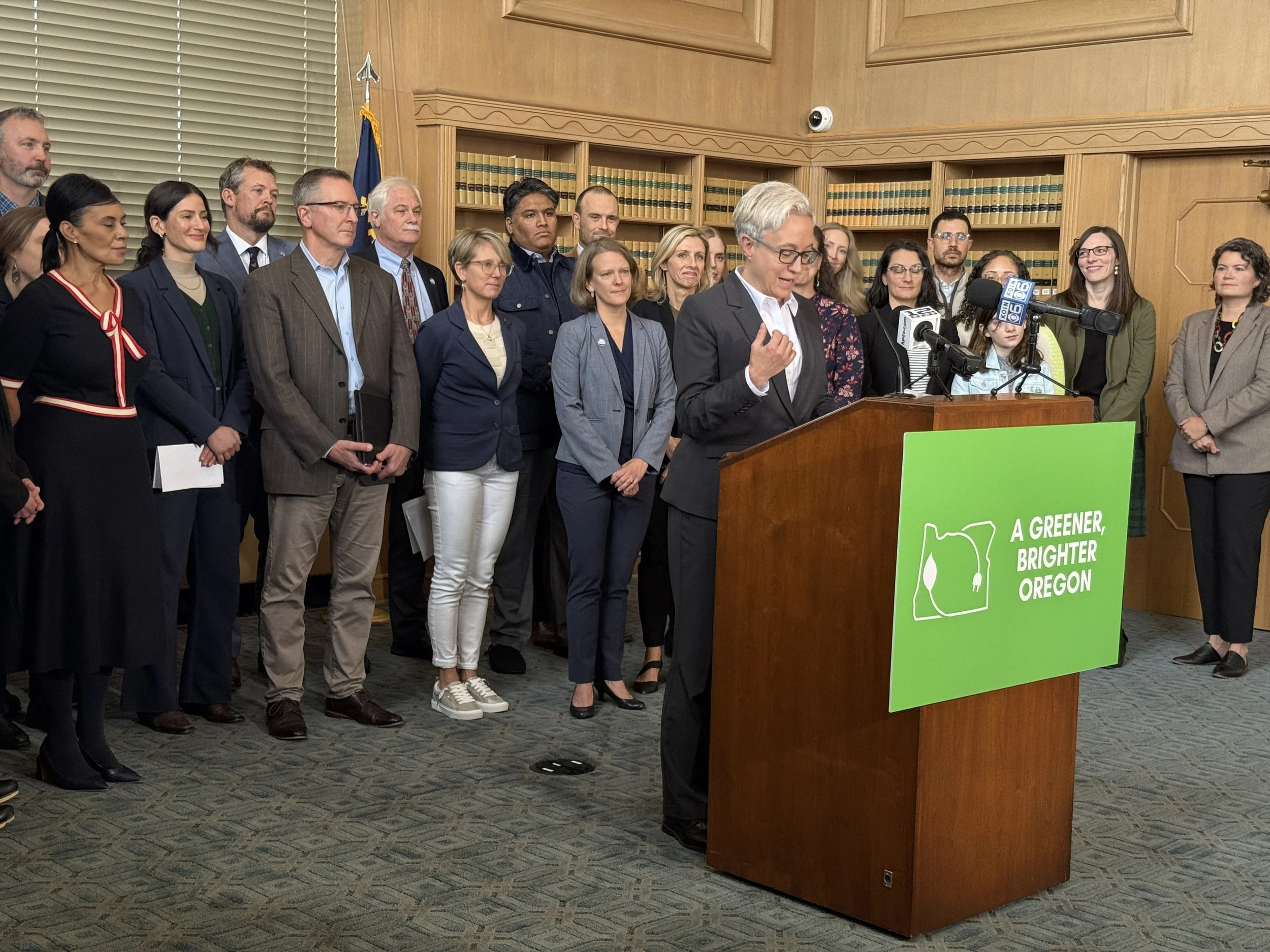
Governor Kotek Issues Order Bolstering Oregon Energy Strategy Actions
On November 19, Oregon Governor Tina Kotek issued Executive Order 25-29, which focuses on reducing greenhouse gas emissions and advancing Oregon’s clean energy future. The EO calls on state agencies to prioritize implementation of the Oregon Energy Strategy pathways.
ODOE Director Janine Benner, Planning and Innovation Assistant Director Alan Zelenka, Technology and Policy Manager Jessica Reichers, and Communications Director Jennifer Kalez joined the Governor and many state and community partners on November 19 to celebrate the executive order.
In her remarks at the event, Governor Kotek said, “Oregon has set ambitious clean electricity and climate action goals through legislation like HB 2021 in the 2021 session. Now we must ensure these goals are achieved in the most cost-effective way possible. This order directs all executive branch agencies to align their decisions, activities, and investments with the five least-cost pathways identified in the Oregon Energy Strategy. This isn’t just a planning document. It’s our roadmap for delivering results efficiently and affordably.”
The Oregon Department of Energy is excited to turn to implementation of the Oregon Energy Strategy, including specific actions identified in the Governor’s order.
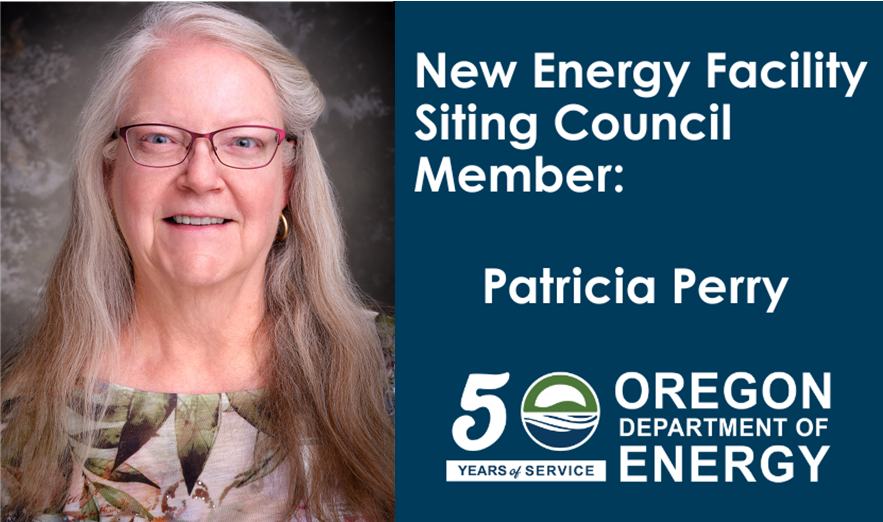
Senate Confirms Patricia Perry as EFSC Member
The Oregon Senate has confirmed Patricia Perry of Pendleton as the newest member of the Energy Facility Siting Council. Perry was appointed by Governor Kotek and confirmed by the Senate for a term beginning October 1, 2025 through June 20, 2029.
Perry brings a strong background in planning to the council. Growing up in Pennsylvania, she attended Southern Illinois University in Carbondale, IL and has a Master’s degree in forestry. Perry has served in several community roles in Umatilla County, including her current role as Planning Director for the Confederated Tribes of the Umatilla Indian Reservation.
Perry will join current council members Kent Howe, Marcy Grail, Cindy Condon, Ann Beier, and Richard Devlin. Members are selected to understand, evaluate, and deliberate complex issues associated with proposed energy facilities under state jurisdiction and how those facilities affect Oregonians, the environment, and nearby communities. The council has the authority to approve or deny site certificates to allow applicants to construct and operate an energy facility. If a site certificate is granted, the council has ongoing regulatory authority over the construction and operation of the facility. The council also regulates the transportation of radioactive materials through Oregon, the disposal of radioactive materials within the state's borders, and the decommissioning of the Trojan Nuclear Power Plant.
To learn more about the council and how to participate in the facility siting process visit the Oregon Department of Energy’s website.

ODOE at 50: Planning Oregon's Energy Future
As we’ve been sharing in this newsletter and on our blog this year, 2025 marks 50 years of the Oregon Department of Energy serving the state. As we continue leading Oregon to a safe, equitable, clean, and sustainable future for the next 50 years (and beyond!), we’re reflecting on what got us here.
As we've noted above, ODOE issued the Oregon Energy Strategy this month, a first-of-its-kind report that identifies pathways, policies, and recommended actions Oregon can take to meet the state’s clean energy policy objectives while addressing energy affordability and reliability. While the energy strategy is the first time the state has developed overarching pathways and policies for meeting Oregon’s energy policy objectives, the state has long history of energy planning and policymaking dating back to the early days of ODOE.
In 1975, the year ODOE was established by the Oregon Legislature, the Office of Energy Research and Planning for then-Governor Tom McCall wrote a report called Transition, calling it “A Book on Future Energy: Nuclear or Solar?” In a 1977 reprint of Transition, Governor McCall added an introduction, in which he said “Transition is a bold document. It challenges the people of this state to create their own future rather than having it arbitrarily imposed upon them.”
In the following decades, Oregon leaders developed bold energy policies and actions, and ODOE administered programs to support energy efficiency and renewable energy in Oregon homes, businesses, agriculture, public buildings, and others. In August, we shared a history of Oregon’s climate goals, including the Climate Protection Program at the Oregon Department of Environmental Quality as well as HB 2021, which established a target to have 100 percent clean electricity from Oregon’s largest utilities and all electricity service suppliers by 2040.
Energy planning over the years has essentially asked the same question: How do we ensure Oregon has the energy it needs while protecting the environment and public health, addressing affordability and reliability, and ensuring everyone in Oregon can benefit from a clean energy future? The energy sector is consistently evolving as new technologies emerge, demand grows and shifts, and climate change takes a toll. Planning also happens at several levels – utilities, communities, states, regions, nationwide – and in each home and business.
Read more on our blog!
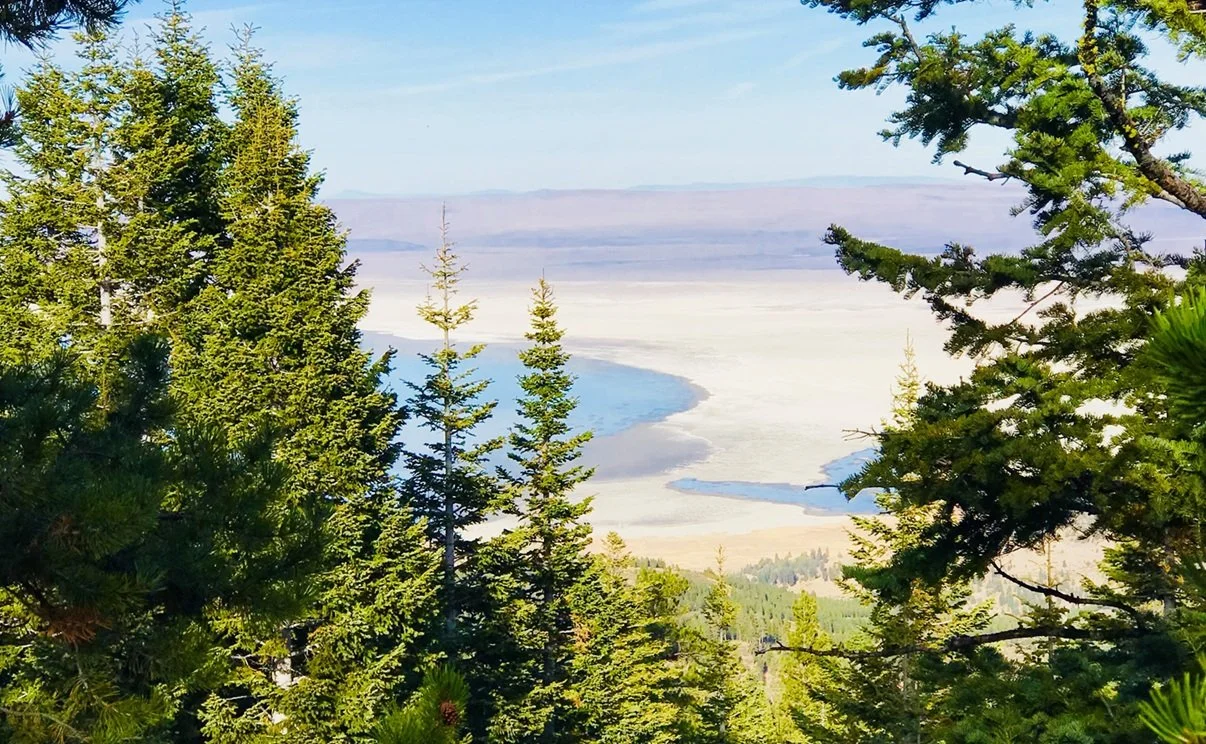
Coming Dec. 5: Draft Land-Based Net Carbon Inventory Report
The Oregon Department of Energy will release a draft report for Oregon’s first Land-Based Net Carbon Inventory on Friday, Dec. 5, 2025. ODOE will host a webinar from 1-3:30 p.m. on the same date and open a public comment period through Dec. 19, 2025.
During the webinar, ODOE's Natural Climate Solutions team will share information about the land-based net carbon inventory. The report represents a critical step toward accounting for the nature-based climate mitigation work occurring in the state to help address the climate crisis.
In 2023, the Oregon legislature passed House Bill 3409, a package of laws on climate and natural climate solutions. It defined natural and working lands, and directed the Oregon Climate Action Commission, ODOE, and seven land managing agencies to establish an accounting system fundamental for tracking greenhouse gases in Oregon’s landscape. The land-based inventory that accounts for greenhouse gas emissions and carbon removals across Oregon’s lands over time is the subject of the report and this webinar.
Learn more about the project on ODOE's website, where ODOE will post the draft, Dec. 5 webinar log-in information, and methods for submitting comments by Dec. 19.

Getting Grounded Podcast: New Heights of Wind
Rising from the landscape along the Columbia plateau are many of Oregon’s wind turbines, capturing the consistent flow of wind and generating 7.5 percent of Oregon’s electricity use in 2023.
On the latest episode of Getting Grounded, our energy fundamentals series of mini episodes, host Katelyn Jackson is joined by Todd Cornett, ODOE's assistant director for siting, to cover wind’s evolution in Oregon. Listen on our blog or your favorite podcast app.
Reports from Around the Agency
Join our team! We are currently recruiting for a Chief Information Officer/IT Manager and a Senior Incentives Analyst. Learn more about these positions on our website and please share with your networks!
On November 24, Governor Kotek issued Executive Order 25-30 in response to a leak and shutdown of the Olympic Pipeline, which brings about 90 percent of the fuel Oregon uses into the state. While Oregon does not expect fuel shortages because of the shutdown, the EO lifts some delivery restrictions to allow fuels to be delivered into the state by other means, such as trucks and ships. ODOE has been putting its Oregon Fuel Action Plan knowledge into action, collaborating with the Governor’s office, fellow state agencies, and fuel companies and organizations to keep fuel flowing.
ODOE Director Janine Benner, Technology and Policy Manager Jessica Reichers, and Senior Policy Analyst Edith Bayer enjoyed the opportunity to present on the Oregon Energy Strategy during November Legislative Days to the Senate Interim Committee on Energy and Environment and the House Interim Committee on Climate, Energy, and Environment. Follow the links to view the presentations.
As we shared in our newsletter last month, ODOE has launched a new incentive program to support early adopters of Oregon's Building Performance Standard. Some Oregon building owners will soon receive letters from our agency about BPS compliance, which begins in 2028. Learn more on ODOE's website.
The City of Ashland is lauching a free Home Energy Score pilot program in January. ODOE was proud to support this effort through an Energy Efficiency and Conservation Block Grant award last year.
Speaking of EECBG awards, ODOE Energy Analyst Roger Kainu visited five cities this month, including Redmond, Myrtle Creek, Coos Bay, North Bend, and Tillamook, to check in on their EECBG-awarded projects, offer support for compliance efforts, and provide information on other federal, state, and local programs that can support community energy projects. Some of the projects supported by ODOE's EECBG program include new electric vehicles, EV chargers, HVAC upgrades, and municiptal lighting improvements.
ODOE Facilities Engineer Stephanie Kruse and Energy Analyst Tom Elliott attended the Willamette Valley Ag Expo in Linn County, hosting an information booth about how ODOE can support rural and agricultural businesses, like through our Rural and Agricultural Energy Assistance Program.
ODOE Energy Security Manager Traci Naile was pleased to join the Clean Rivers Cooperative Board to introduce ODOE's Energy Security Plan and hear feedback and questions. The cooperative was founded in 1971 and focuses on providing response, training, and education on marine spills.
The Oregon Hanford Cleanup Board met in Boardman on November 13. On the agenda were updates from ODOE staff, the U.S. Department of Energy Hanford Field Office, the Washington Department of Ecology, and Oregon Department of Agriculture. Learn more about the board and access meeting materials and recordings on ODOE's website.
ODOE staff were pleased to join the Association of Oregon Counties for its annual conference in Eugene. Senior Policy Analyst Michael Freels presented on a panel about grid expectations, focusing on energy capacity and future legislation. Codes & Standards Analyst Madeline O'Dwyer presented to facility managers on Oregon's new Building Performance Standard.
Did you know ODOE's Energy Facility Siting Team is currently reviewing more than a dozen proposed or amended energy facilities? From wind to solar facilities – to combined wind, solar, and storage facilities – you can learn more about the state's process and how to get involved on our website. You can also sign up to receive a monthly facility siting update showing the latest and greatest.
Oregonians can now search for available renewable energy and energy efficiency incentive programs through ODOE’s Energy Hub for Incentive Programs and Projects in Oregon (Energy HIPPO!). Plug your address into the online calculator along with a few other basic pieces of information, and the tool will show the various programs you may be eligible for. The Energy HIPPO also provides other helpful resources for homeowners, renters, and contractors.
LOOKING AHEAD
Webinar on Draft Land-Based Net Carbon Inventory | December 5, 2025 | Via Webinar
Business & the Environment Conference and Expo | December 9-10, 2025 | ODOE Giving Keynote Address
Oregon Climate Action Commission | December 12, 2025 | Via Webinar
Presenting the Oregon Energy Strategy | December 17, 2025 | Via Webinar
Energy Facility Siting Council | December 19, 2025 | Salem and Via Webinar
Current Rulemakings (click to see details)
Other Stakeholder Groups (click to see details)
Making Energy Work Winter Webinar on Oregon's Rural and Agricultural Energy Transition | December 9, 2025 | ODOE Presenting
Sign up to receive this newsletter by email.