
ODOE Debuts New Strategic Plan that Sets Agency’s Four-Year Direction
The Oregon Department of Energy finalized a new 2026-2029 Strategic Plan, which reaffirms our mission and vision, and identifies five pillars that serve as the foundation for success that will carry us forward as an agency.
Following the launch of a new Oregon Energy Strategy in 2025, it’s only fitting that we also now present a new strategic plan for ODOE – one that provides clarity and focus to more effectively deliver on our mission.
ODOE’s strategic plan identifies five pillars, or areas of focus:
-
The Oregon Department of Energy has many responsibilities that inform and influence our state’s decisions, actions, and outcomes in energy and other critical areas. We contribute to and rely on guidance from robust data analysis, external engagement, consultation with technical experts and other state agencies, policy examination, and studies and reports to continually reassess priorities and identify solutions for Oregon’s greatest energy challenges and opportunities. Recent legislatively authorized plans and strategies have outlined efforts and needs that will demand significant time. ODOE must focus daily work, programs, and projects on these areas of greatest need, while continuing to respond to emerging ideas, best practices, and shifting external circumstances. This will involve coordination with other state agencies to ensure alignment of recommendations, information, and programs across the state enterprise to most effectively and efficiently address Oregon’s greatest challenges.
-
ODOE works with diverse communities, organizations, and industries that contribute to and rely on constantly evolving policies, services, and resources. Engaging people with a range of perspectives builds mutual understanding and creates a more inclusive and coordinated discourse about challenges and solutions. Developing and using well-informed technical analysis as part of engagement and discourse can support collaboration. ODOE can strengthen our efforts to conduct inclusive and purpose-driven engagement, convene groups, effectively communicate ODOE services, develop connections, and problem-solve strategically across the state.
-
Many of the people, communities, and businesses that most benefit from ODOE’s programs — from energy efficiency to nuclear safety to building codes — are not technical experts or part of the energy industry. At the same time, ODOE is a key resource for researchers, energy and fuel companies, and interest groups who expect advanced levels of information, analysis, and support. We must design and implement each service and program to meet the specific needs of its intended user and actively reach out to those who can benefit from the services and programs.
-
ODOE's ability to deliver on its mission depends on a dedicated, skilled workforce and effective processes and technologies across all functions. By building on existing strengths, supporting clear roles and priorities, and continuously refining how we plan and execute our work, the agency can sustain high performance, manage workloads effectively, and ensure consistent, results-focused delivery of programs and services.
-
ODOE has a statutory responsibility to serve as a centralized repository of energy information and to provide useful, objective insights into Oregon’s energy and related environmental, safety, and security needs and trends. Meeting this responsibility in a rapidly changing landscape relies on data quality, analytical accuracy, clarity of roles, and intentional use of tools and resources. By strengthening how data is managed, analyzed, and applied, ODOE can ensure its information remains credible, accessible, and useful to support programs, services, policy development, and decision making.
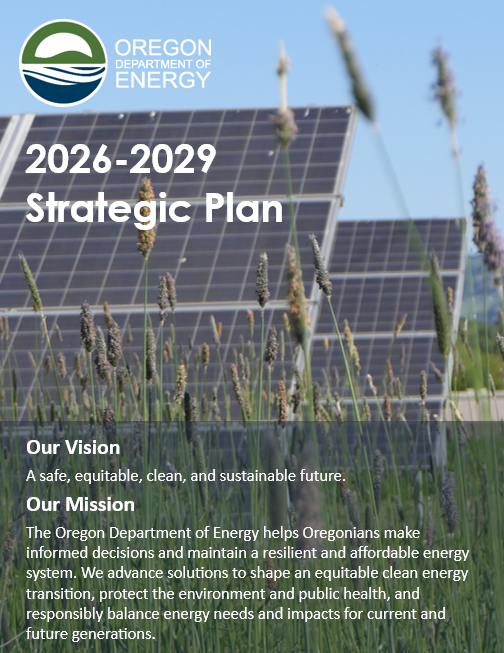
Our Mission: The Oregon Department of Energy helps Oregonians make informed decisions and maintain a resilient and affordable energy system. We advance solutions to shape an equitable clean energy transition, protect the environment and public health, and responsibly balance energy needs and impacts for current and future generations.
Pillars are the foundational elements that make our agency successful and help us achieve our mission and vision. This plan strengthens these pillars by identifying goals, actions, and progress indicators that will bolster our work over the next four years.
Now we’ll turn to implementation planning, including prioritizing which actions to focus on in the first year to hit the ground running. ODOE will share regular updates on implementation with the Energy Advisory Work Group and post updates on our website. Check out the complete strategic plan, including goals, actions, and progress indicators associated with our pillars.