
Partners prep for Hanford waste shipments through Oregon
Starting as soon as late 2027, shipments of transuranic waste from the Hanford Site in Richland, Washington, will journey through Oregon on their way to a permanent disposal site in New Mexico.
On Aug. 10, 2026, ODOE joined the Washington State Department of Ecology, Western Interstate Energy Board, and some members of the Oregon Hanford Cleanup Board at the U.S. Department of Energy office in Richland, Washington, to learn more about the shipments.
Beginning in 1943 at the Hanford site, the federal government produced plutonium for America’s nuclear weapons program for more than 40 years. The process created large amounts of radioactive and chemically hazardous waste. Efforts are underway to clean up the site and part of the cleanup includes relocating materials offsite to safe, permanent disposal locations.
Not all waste from Hanford is the same or gets the same treatment. In this case, the transuranic, or TRU, waste scheduled to ship through Oregon includes lab equipment, protective clothing, and tools tainted with small amounts of plutonium and other radioactive materials. Before a break in shipping in 2011, U.S. DOE had already sent nearly 600 shipments successfully through Oregon.
When shipments resume, U.S. DOE expects to ship 10-12 shipments per week over a ten-year period. Shipments will travel along Interstate 84 from Umatilla to Ontario on route to America’s only location for permanent disposal of this waste in New Mexico.
At the August meeting, attendees were able to view an example of the shipment truck and canisters, hear from two of the contracted drivers, learn about truck inspections for radiologic material, and ask questions.
Safety is the priority for all organizations involved. ODOE is coordinating with partners along the shipping route to raise awareness of the upcoming shipments, prepare for permit and inspection needs, and offer additional training for first responders. ODOE supports safe transportation of TRU waste to advance Hanford cleanup, and advocates that U.S. DOE treat all radioactive waste shipments through Oregon with the same level of consideration, planning, transparency, and safety as TRU shipments.
Safety measures
Waste is stored in drums placed inside canisters. The canisters have multiple layers of casing and passed tests for crash scenarios, including drops, punctures, and fires.
Washington State Patrol conducts an enhanced inspection meant for radioactive shipments before the trucks enter Oregon. Oregon Department of Transportation inspectors can conduct additional inspections along the route.
Two drivers per truck (who have passed specific requirements and training) transport several canisters at a time.
Shipments are postponed for weather events.
Trucks are speed restricted at max 65 mph.
Shipments are tracked along the route and require a radioactive material transport permit from U.S. DOT and ODOT.
Extra training offered for first responders.
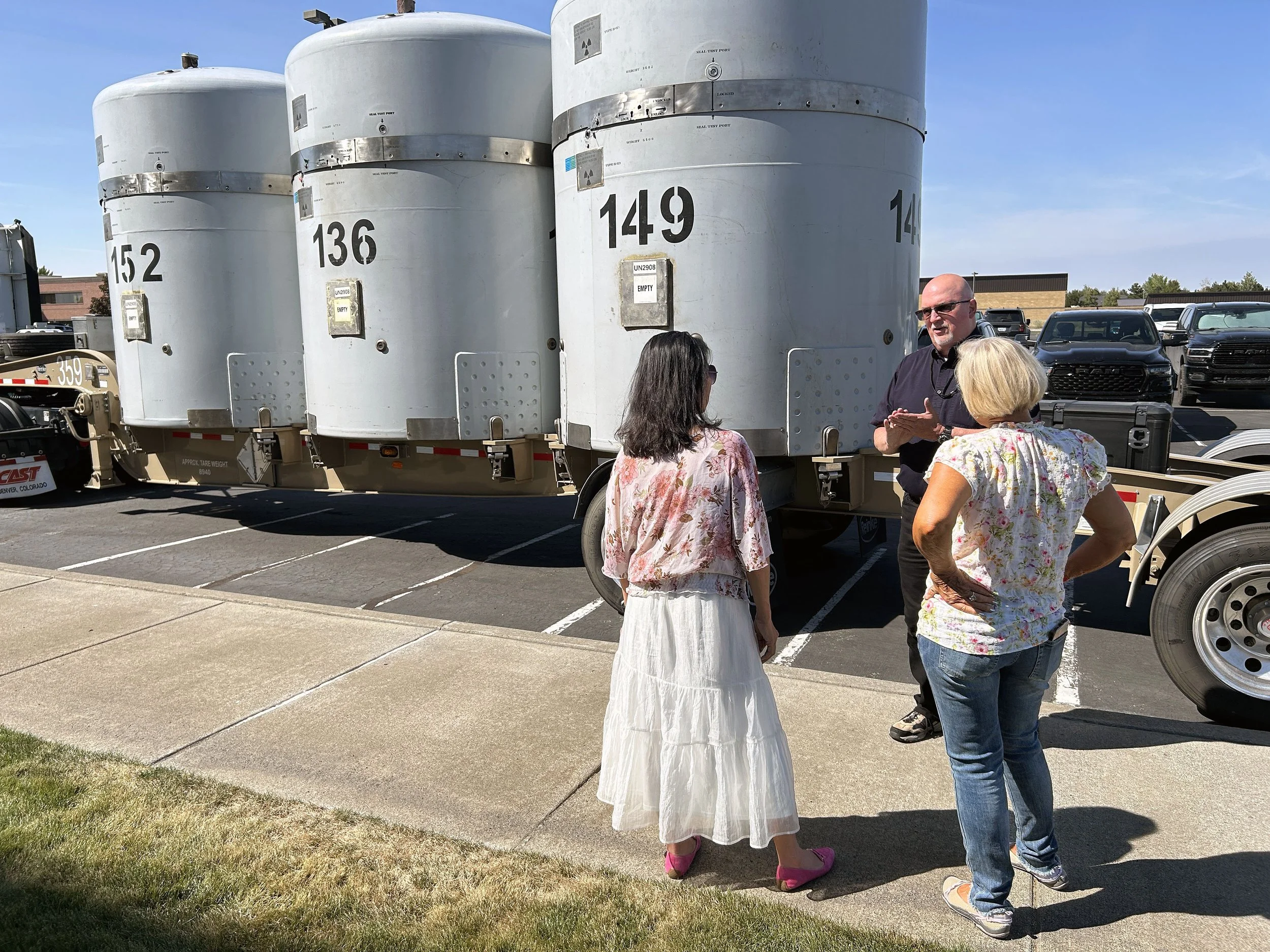
Mark Reese, ODOE’s Nuclear Emergency & Radioactive Material Transportation Program Coordinator, answers questions from Oregon Rep. Bobby Levy and Oregon Rep. Thuy Tran.
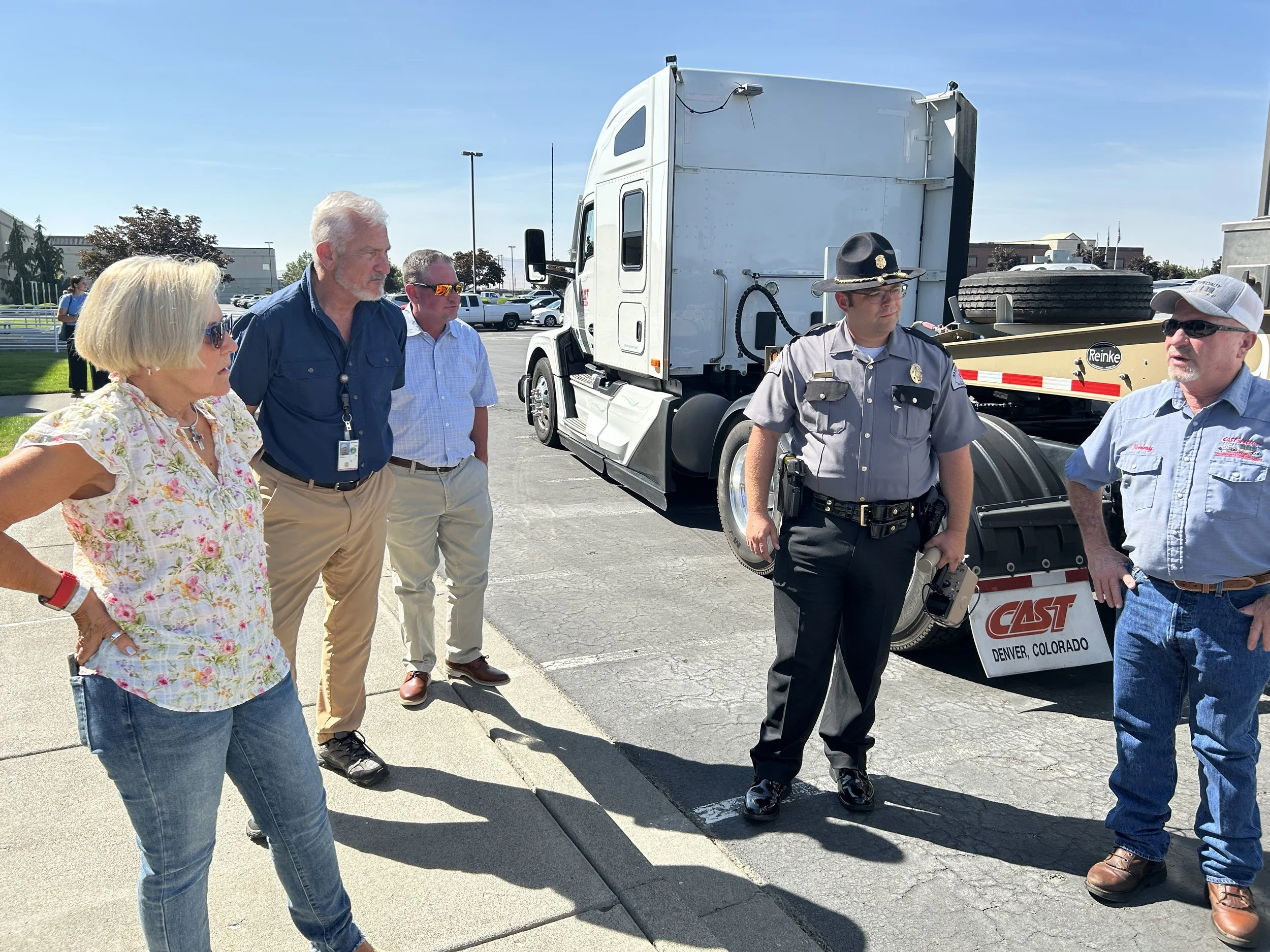
A driver from the contract transport company (far right) discusses driver requirements with meeting attendees, including Oregon Rep. Bobby Levy (far left).