
Oregon Department of Energy Report Shows Oregon’s Energy is Getting Cleaner Even as Demand is Growing
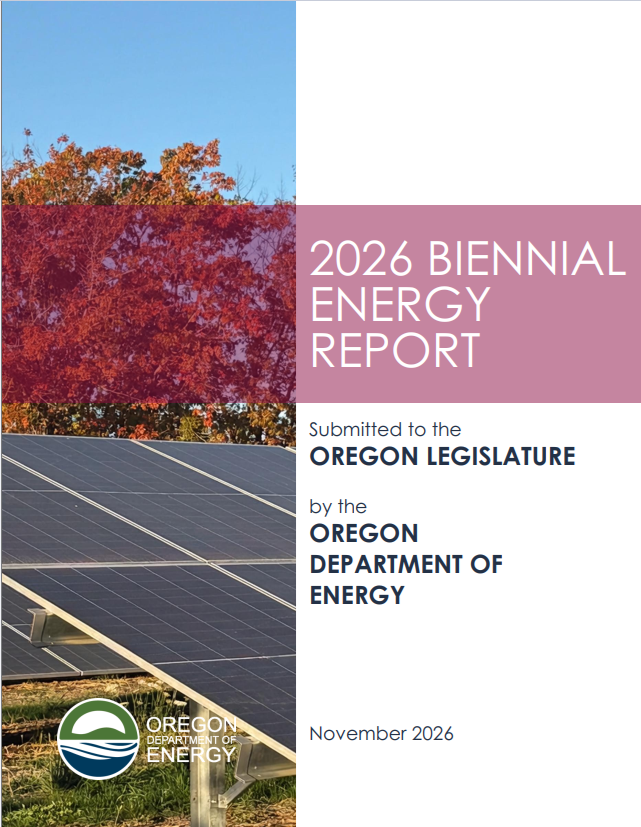
SALEM – The Oregon Department of Energy recently published its 2026 Biennial Energy Report, featuring fundamental information and data about energy in Oregon, highlights of emerging energy technologies and resources, and foundational “Energy 101s”and deep-dive policy briefs on current topics and technologies.
Like past editions, the 2026 report was shaped by a data-driven process, highlighting new shifts in energy use and production, as well as energy costs and the economy. The Oregon Energy Strategy, published in 2025, provided inspiration for several topics in this year’s report, including a set of emerging clean energy technology reviews, Energy 101s on energy facility siting and permitting, community benefits frameworks, and reliability and firm power, among others. As Oregon moves toward cleaner energy resources, energy demand is growing faster than it has in several decades, led by the proliferation of data centers and industrial growth.
Meeting Oregon’s energy challenges also comes with opportunities, as the report outlines. Efforts to recycle decommissioned solar and wind facilities keep materials out of landfills, while industrial symbiosis concepts can harness potentially wasted energy for use in other applications, such as heat from industrial processes. A hard-to-electrify sector, aviation, can greatly reduce emissions (and support Oregon’s clean energy economy) by switching to sustainable aviation fuels. Charging for medium- and heavy-duty electric vehicles can provide flexible energy storage for the larger grid to tap into during high demand periods.
"The Oregon Department of Energy looks forward to issuing this report every two years to show what our state’s energy landscape looks like – and what Oregon wants it to look like in the future,” said ODOE Director Janine Benner. “We’ve tackled tough topics again this year, like data centers and their effects on energy, and leadership changes at the federal level that have affected energy and climate program funding and policies. Our hope is that this report provides a foundation for important conversations about Oregon’s energy future.”
ODOE is pleased to share the new report with Oregon leaders and elected officials, energy stakeholders, and the community. Oregonians are invited to ask questions, provide feedback, or request a report presentation for their organization or community group: https://odoe.powerappsportals.us/en-US/ber-comment/
The 2026 Biennial Energy Report is available in its entirety and by section at https://energyinfo.oregon.gov/ber.