
Grounded Podcast Episode 53: Fueling EVs in rural Oregon
Fully electric and plug-in hybrid vehicles are powered by electricity, so they need to “fuel up” at charging stations. While as much as 80 percent of charging happens at home, public chargers allow those without access to home charging and those traveling farther distances to recharge their batteries.
On this episode of Grounded, we’re joined by Jillian DiMedio, ODOE Senior Energy Policy Analyst to discuss the availability and reliability of chargers in Oregon. We’re also joined by Steve Gutmann, co-founder of EVmath, and Robert Wallace, executive director of Wy’East RC&D, to discuss the challenges and benefits of EVs and charging in rural Oregon.
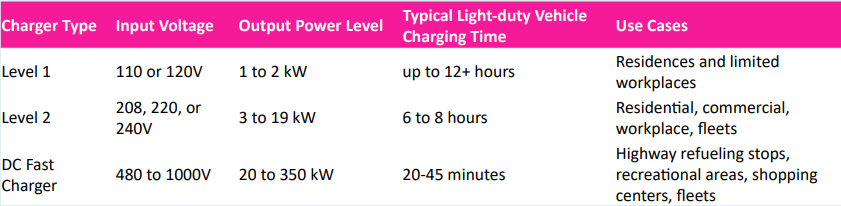
Charging infrastructure in Oregon continues to expand, but growth has slowed relative to the national pace and risks further slowing amid diminishing federal support. Between 2023 and 2025, Level 2 charging ports in Oregon increased by 42 percent and DC Fast Charger Ports by 53.5 percent.
While public charging reliability is beginning to show improvement, with recent surveys indicating growing user confidence, charger malfunctions remain the most reported issue among EV drivers. The introduction of the National Electric Vehicle Infrastructure program standards is driving a shift in the industry toward greater accountability, improved performance, and more consistent user experiences.
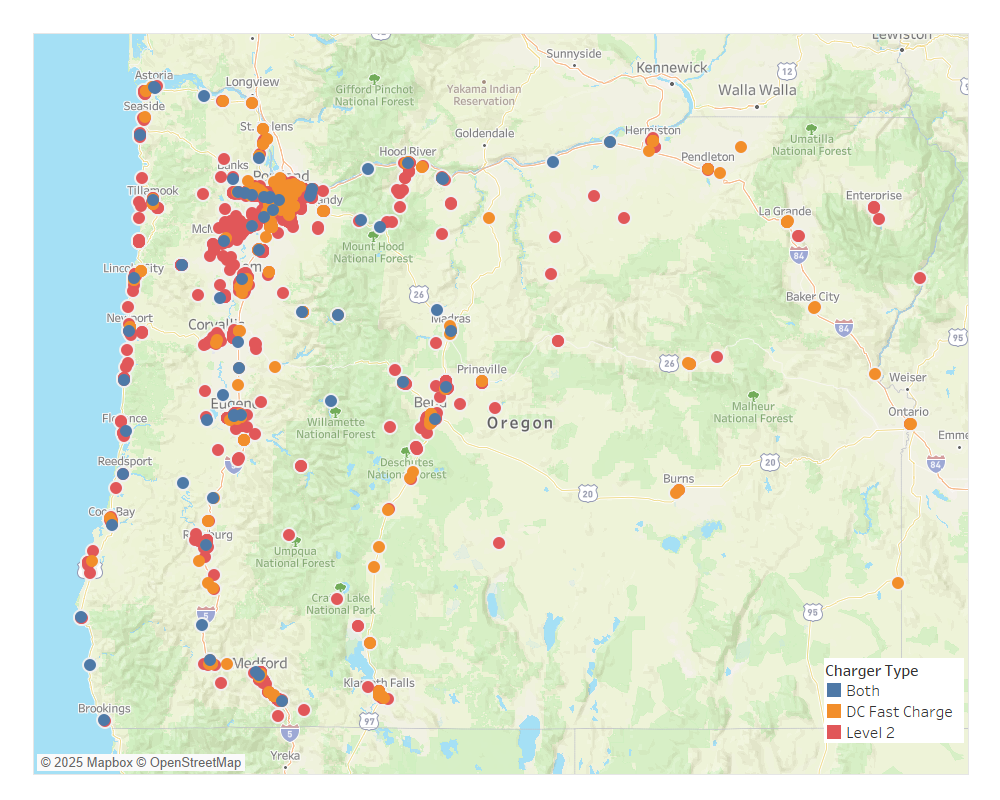
Charger locations in Oregon by type.