
March 2026 Newsletter
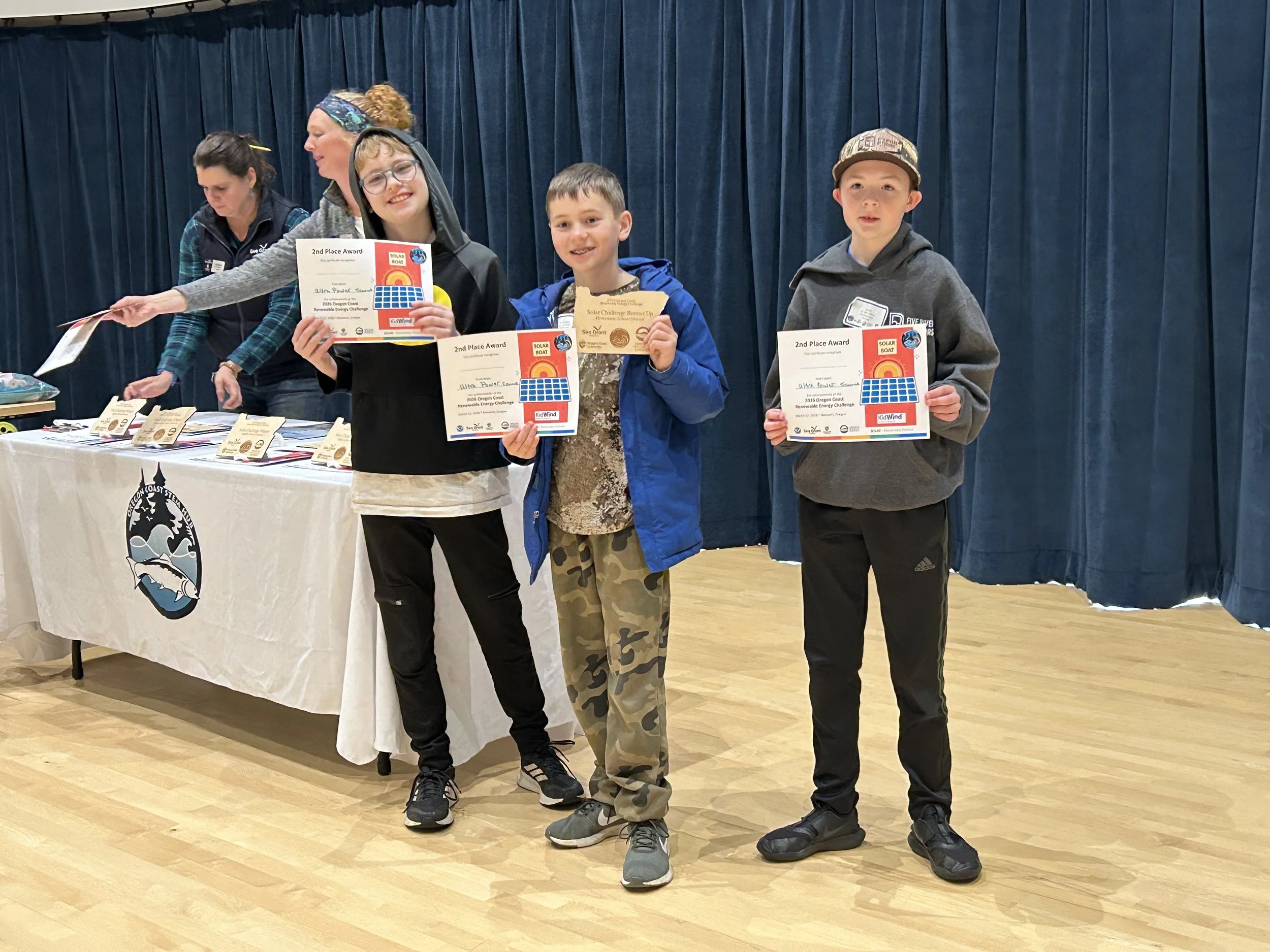
Oregon's Future Energy Experts Compete in Renewable Energy Challenge
On March 12, the Oregon Department of Energy was proud to sponsor the 2026 Oregon Coast Renewable Energy Challenge at the Hatfield Marine Science Center in Newport. Students from public elementary and middle schools along the coast created their own renewable solar, wind, or wave energy devices to compete for best design.
ODOE Director Janine Benner kicked off the event with a morning keynote presentation, walking students, educators, and parents through the Oregon Energy Strategy. The energy strategy presents five pathways that will help Oregon reach its climate and energy policy goals. When asked which of the five pathways – energy efficiency, clean electricity, electrification, low-carbon fuels, and resilience – students thought were most important, multiple hands raised for each pathway. “You are all right,” Janine said after the audience weighed in. “It will take actions in each of the pathways for us to reach our goals.”
The Challenge is designed to educate students about renewable energy options that could be built in and provide energy for their own coastal communities (and beyond). The students developed presentation boards alongside their devices, which were tested in water tanks or an indoor wind tunnel.
ODOE sponsored the event alongside Oregon State University, Oregon Sea Grant, and Oregon Coast STEM Hub. Janine was joined by ODOE Communications Director Jenny Kalez to serve as judges for some of the projects – both were impressed by the creativity and teamwork shown by the students. Middle school first place solar winners “Jewell’s Joules” made a solar-powered tractor boat that could move on water and on land. Wind device testers worked together to adjust turbine blades to maximize power output in the indoor wind tunnel.
We look forward to someday working with this future group of energy experts! See a list of the winners on ODOE's blog.
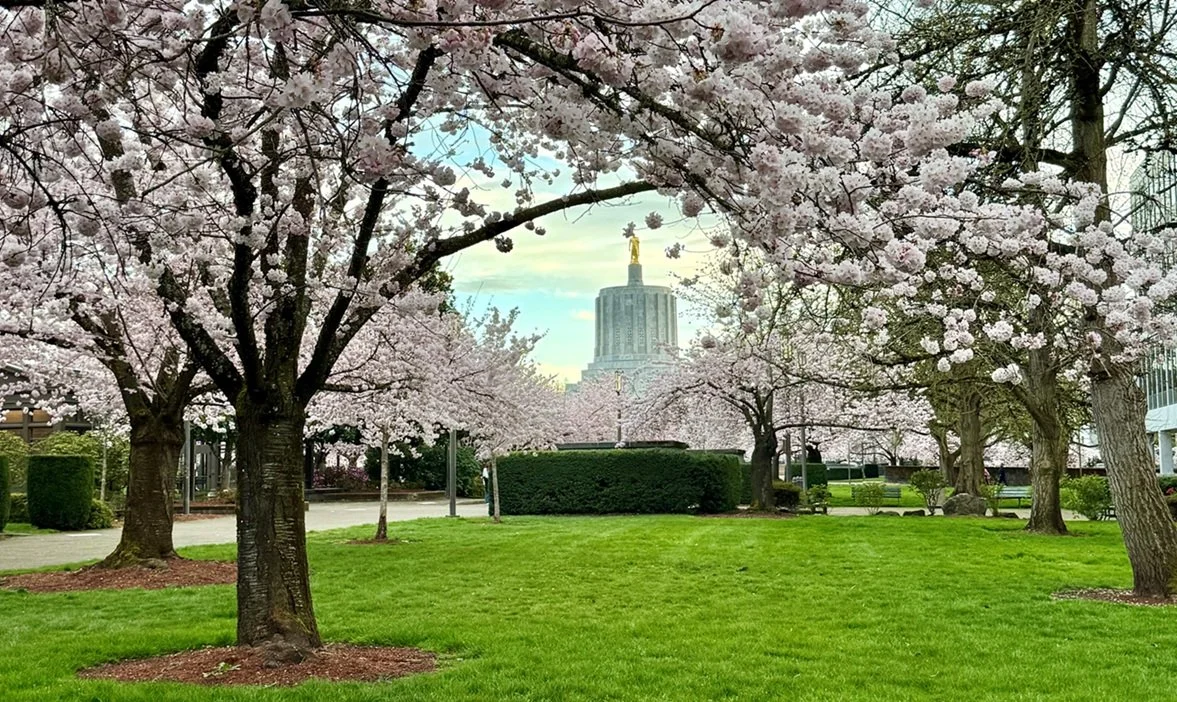
Oregon's 2026 Legislative Session Comes to a Close
As part of our agency mission and vision, the Oregon Department of Energy carefully watched the 2026 legislative session, which opened February 2 and closed March 6. So that our work in the future is well-informed, we paid attention to all legislation that touches the energy sector. We provided information on energy topics to ensure informed decisions about legislation and legislative action. In addition, we followed bills that could affect our own work and were engaged in conversations about our agency budget.
Just after the 2025 Legislative Session, Congress passed House Resolution 1, a sweeping bill with several provisions that affected Oregon. This included both short-term and long-term budget shortfalls, as well as implications for the energy sector. The 2026 short session was centered on those budget shortfalls, with agencies – including the Oregon Department of Energy – prepared to help address the gap between existing budgets and available funds.
Several energy-related bills passed during session, with new clean energy projects and transportation funding as the highest profile energy issues of session. Learn more about the energy-related bills and the session in general on our blog and in our 2026 Legislative Session Report.

Fueling Up in Oregon: Supply and Pricing
Recent local and national headlines have highlighted what many Oregonians are experiencing when they stop to get gas: prices have increased at the pump. International and national actions are affecting prices across the country, including here in Oregon. While Oregonians are seeing fuel costs go up, the state does not expect to experience any fuel shortages. On our blog this month, we dive into where Oregon's transportation fuels come from and what influences gas prices.
The Pacific Northwest has no crude oil resources and is isolated from the nation’s major petroleum production regions. There are five major oil refineries located in Washington State, two near Bellingham, two near Anacortes, and one in Tacoma. These refineries import the crude oil required for fuel production from North Dakota, Alaska, and Canada. Oregon does produce 30 percent of the ethanol and 12 percent of the biodiesel that is blended into gas and diesel fuel consumed in Oregon to reduce greenhouse gas emissions. Electricity generated in Oregon also powers electric vehicles. Most of the low-carbon fuels consumed in Oregon today are imported into the state but there is opportunity to expand Oregon’s production and consumption of low-carbon fuels.
Many factors influence the price of fuel. Much of the overall price of fuel comes from the crude oil itself, as well as the costs to refine the oil into useful fuel. Other costs include distribution and marketing by petroleum companies. Federal and state taxes also affect gas prices. State taxes are levied on transportation fuels by the gallon to fund the creation, preservation, and maintenance of Oregon’s roads and highways – as of 2026, Oregon’s fuel tax rate is 40 cents per gallon of gasoline or diesel. Many cities also levy taxes on fuels by the gallon to preserve and maintain local roads. There is also additional cost due to compliance with regulations, such as the Oregon Clean Fuels Program and Climate Protection Program.
Learn more on our blog.
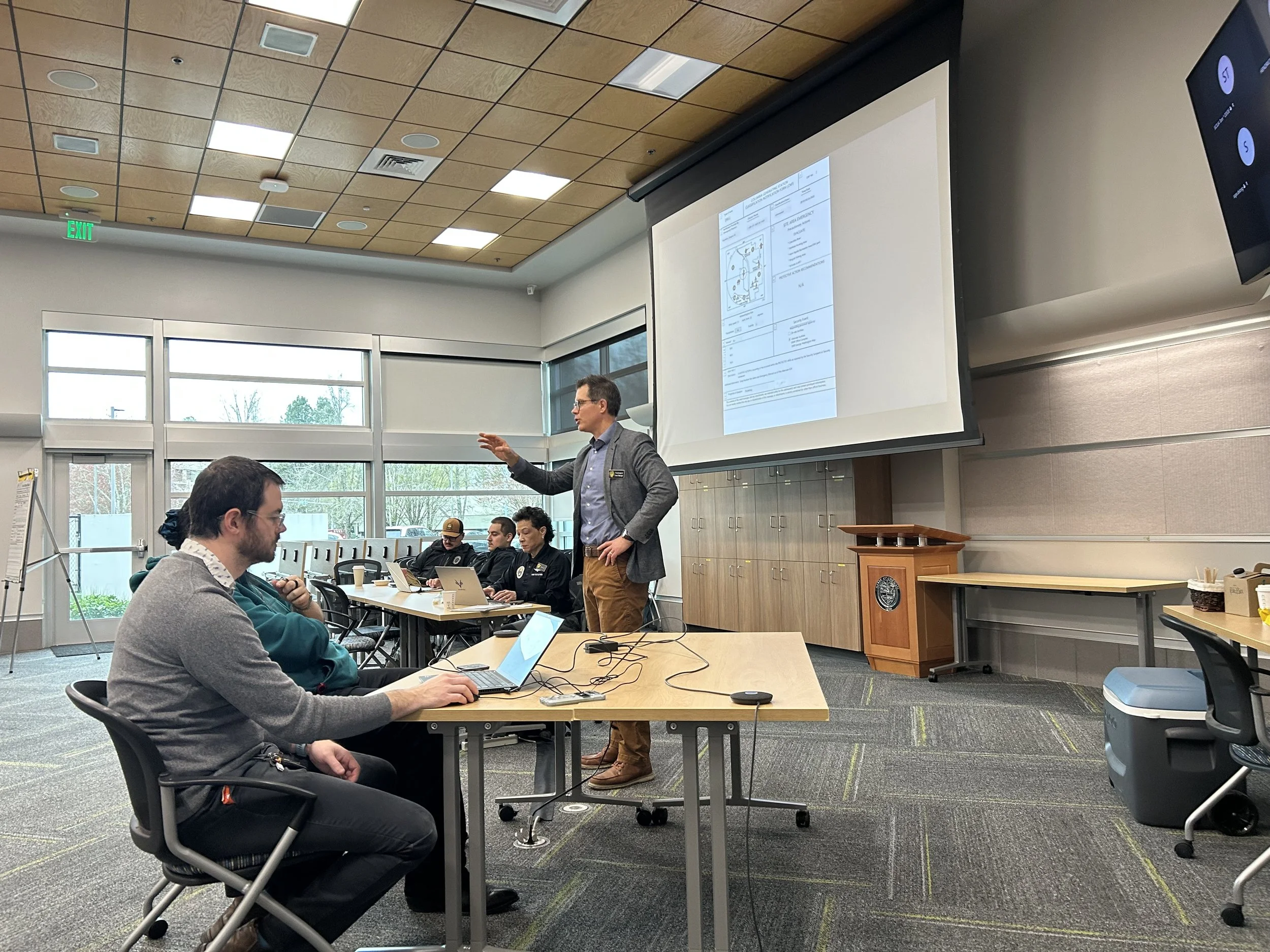
ODOE Activates Agency Operations Center for Annual Emergency Exercise
On March 24, 2026, the Oregon Department of Energy participated in one of its annual nuclear emergency exercises. Each year, ODOE staff activate our Agency Operations Center in Salem and send staff north to Washington to simulate and practice how we would respond in the event of a radiological emergency at the Hanford Site or the Columbia Generating Station nuclear power plant near Richland, WA. Both sites sit along the Columbia River, just 35 miles north of Oregon’s border.
This year’s exercise involved a “hostile act” scenario at the Columbia Generating Station. In the scenario, CGS alerted Oregon of explosions on site that could affect the safety of the plant. Over the course of the exercise, our experts, including those from partner agencies and organizations, discussed risks to Oregon and potential actions residents in Morrow or Umatilla counties would need to take to stay safe.
The exercise was evaluated by the Federal Emergency Management Agency, the federal agency responsible for overseeing nuclear power plant emergency preparedness for offsite response organizations across the country. Two FEMA evaluators joined the Agency Operations Center to observe our actions and decisions. They’ll provide a report later with feedback and suggestions for improvements. March’s graded exercise followed a “dress rehearsal” exercise we completed in February. And we’re not done yet! We’ll do a third exercise in May to practice an emergency at Hanford.
We practice these drills each year, and the feedback we’ll receive from FEMA will help us improve operations and response even further. We hope we never have to put our practice into action – but the drills will ensure we’re ready if we do.
Learn more about this month's drill on our blog.

ODOE Seeks Public Comments Through April 10 on Draft Gap Measures and Scenarios for TIGHGER 2.0 Project
The Oregon Department of Energy is seeking public comments by April 10, 2026 related to the Transformational Integrated Greenhouse Gas Emissions Reduction 2.0 project. The TIGHGER 2.0 Project aims to assess Oregon’s progress toward meeting the state’s greenhouse gas emissions reduction goals. The latest forecast found that Oregon does not currently have the programs and policies in place to meet either the 2035 or 2050 goal.
ODOE has provided a list of draft measures for modeling that could help close the gap between the projected emissions reductions and Oregon’s 2035 and 2050 goals. We have also identified scenarios that represent potential risks associated with certain greenhouse gas emission reduction initiatives and uncertainty with respect to future energy demand.
The draft gap measures listed in the document are for informational purposes only and are not being proposed for implementation. We expect that some measures included in the draft list may be removed or amended based on feedback we receive. Once feedback on the gap measures is taken into consideration, ODOE will seek to quantify the potential greenhouse gas emissions reductions associated with these measures, so the information is available for future consideration by decision-makers.
ODOE is accepting public comments through 5 p.m. on April 10, 2026. Please submit your thoughts to OCAC@energy.oregon.gov.

Grounded Podcast: Fueling EVs in Rural Oregon
Fully electric and plug-in hybrid vehicles are powered by electricity, so they need to “fuel up” at charging stations. While as much as 80 percent of charging happens at home, public chargers allow those without access to home charging, and those traveling farther distances, to recharge their batteries.
On the latest episode of our Grounded podcast, host Katelyn Jackson is joined by Jillian DiMedio, ODOE Senior Energy Policy Analyst, to discuss the availability and reliability of chargers in Oregon. She's also joined by Steve Gutmann, co-founder of EVmath, and Robert Wallace, executive director of Wy’East RC&D, to discuss the challenges and benefits of EVs and charging in rural Oregon.
Give it a listen on our blog or your favorite podcast app.
Reports from Around the Agency
Following publication of the Oregon Energy Strategy, ODOE is conducting a workforce needs assessment to better understand the extent to which Oregon’s current workforce and training opportunities are prepared to meet the strategy’s modeled employment needs. Organizations that are involved in educating or training workers in the energy sector are invited to take a survey by 5 p.m. on April 2 to inform the assessment.
As we mentioned in last month's newsletter, ODOE is now accepting applications for the Building Energy Reduction Incentive program. The agency will host open office hours to answer questions on April 1 (no joke) and applications are due by 5 p.m. on April 10. Learn more.
On March 11, ODOE Director Janine Benner was pleased to join the Portland Garden Club, an organization not just dedicated to gardening but also to improving and protecting the quality of the environment, to discuss the Oregon Energy Strategy and its pathways to meeting the state's energy and climate policy objectives.
Director Benner and ODOE Energy Policy Team Lead Edith Bayer presented to the Oregon Sustainability Board on March 20 about the Oregon Energy Strategy and how the policy actions can support the Board's work.
Did you know ODOE's Energy Facility Siting Team is currently reviewing more than a dozen proposed or amended energy facilities? From wind to solar facilities – to combined wind, solar, and storage facilities – you can learn more about the state's process and how to get involved on our website. You can also sign up to receive a monthly facility siting update showing the latest and greatest.
Oregonians can search for available renewable energy and energy efficiency incentive programs through ODOE’s Energy Hub for Incentive Programs and Projects in Oregon (Energy HIPPO!). Plug your address into the online calculator along with a few other basic pieces of information, and the tool will show the various programs you may be eligible for. The Energy HIPPO also provides other helpful resources for homeowners, renters, and contractors.
LOOKING AHEAD
Oregon Climate Action Commission | April 10, 2026 | Via Webinar
Energy Facility Siting Council | April 17, 2026 | Salem and Via Webinar
Current Rulemakings (click to see details)
Other Stakeholder Groups (click to see details)
Sign up to receive this newsletter by email.