
January 2026 Newsletter

New Reports Highlight Importance of Oregon Lands and Workforce Needs for Climate Solutions
Two new reports published by the Oregon Department of Energy in coordination with the Oregon Climate Action Commission highlight how Oregon's lands support climate mitigation efforts and the Oregon workforce needs that could bolster efforts to meet the state’s climate goals.
A new Land-Based Net Carbon Inventory report outlines the greenhouse gas emissions and carbon removals across Oregon lands, including forests, grasslands, croplands, developed lands, wetlands, and biomass burning, which includes wildfires and prescribed burns. Data analysis from 1990 to 2024 estimates that Oregon’s land is an overall carbon “sink,” meaning it removes more carbon from the atmosphere than it emits, though the amount of carbon that lands remove annually has declined since 1990. Forest lands provide the greatest benefit, or highest amount of carbon removals, among the land types. Grasslands also provided a substantial carbon benefit in most years. Emissions from wildfires have increased since 1990, and particularly over the last decade.
With the baseline understanding provided by this work, Oregon is better equipped to conduct analyses that inform natural climate solutions and scenario planning for land protection and management. Natural climate solutions use nature-based actions to increase carbon sequestration and storage in natural and working lands.
A complementary study on workforce development and training needs for natural climate solutions looked at the specific workforce skills, training and education, and resources Oregon needs to support the adoption of natural climate solutions on natural and working lands. Natural climate solutions enhance or protect carbon sequestration and storage, and maintain or increase ecosystem function and community wellness. According to the study, there are nearly 130,000 natural climate solutions-related jobs already in Oregon, and natural climate solutions-related industries are growing, with opportunities for additional training and engagement with workers.
Recommendations outlined in the study address contracting and procurement improvements; recruitment and hiring efforts; training and advancement; and metrics, monitoring, and accountability measures. Some recommendations may need legislative action but many could be advanced with organizational and administrative changes within existing programs.

ODOE's Energy Efficient Rebuilding Program Issues More than 850 Incentives to Wildfire Survivors
More than 5,000 structures and over 1 million acres were burned during the 21 wildfires that devastated Oregon communities over Labor Day weekend in 2020. Hardest-hit counties included Clackamas, Douglas, Jackson, Klamath, Lane, Lincoln, Linn, and Marion.
The Oregon Department of Energy’s Energy Efficient Wildfire Rebuilding Incentive Program offered funding to support rebuilding efforts and encourage energy efficient design and equipment. Created by the Oregon Legislature through HB 5006 in 2021, ODOE’s program issued incentives for site-built homes, manufactured homes, multi-family buildings, and commercial structures across the Oregon counties affected by the Labor Day fires.
ODOE issued 852 incentives in eight counties, totaling about $5.8 million over the life of the program.The 2020 wildfires were devastating to Oregon communities, and the Oregon Department of Energy was proud to offer this program to support rebuilding efforts.
Read ODOE’s complete program wrap-up report on our website and learn more about our other incentive programs.
New Building Peformance Standard Incentive Coming Soon
ODOE’s Building Performance Standard program will soon launch a new incentive opportunity for BPS-covered building owners. The Building Energy Reduction Incentive program will provide an early financial incentive to help upgrade energy efficiency measures ahead of future compliance requirements. ODOE has $12 million in federal funding to support the program, which is designed to help owners of covered buildings that are 20,000 square feet or larger meet their Energy Use Intensity target. ODOE expects to open applications in February – keep an eye on ODOE’s website and sign up for email updates to be notified about program launch.
To support building owners as the BPS program launches, ODOE’s BPS team will host a series of informational webinars. The first webinar, BPS 101, will take place on January 30, 2026 (today at 11 a.m.!), and will provide an overview of the Building Performance Standard and what it means for covered building owners. A second webinar scheduled for February 20, 2026, will offer details of the new Building Energy Reduction Incentive program, including a walkthrough of the application requirements.

What to Expect in the 2026 Short Legislative Session
The 2026 Legislative Session will begin on Monday, February 2, 2026 at the State Capitol, which is fully open for business after a years-long renovation project. Legislative sessions in even years can last up to 35 days and are generally referred to as “short session.” Unlike in the odd-year long session, the number of bills is capped at two per legislator, along with bills for committees and presiding officers. That means that both the timeline and the to-do list are shorter for legislators, but short sessions are always jam-packed anyway.
This year, the big picture at the Legislature is mostly dominated by the state budget. After the passage of the federal HR 1 last summer, the state budget must adjust to both lower tax revenue in the short term and fewer federal dollars to support health care and human services in the longer term. Because of that long-term loss of federal funding, the state budget is tight and it’s unlikely that many - or any - bills with a price tag will pass this session.
Instead, legislators are leaning in on other ways to fund new work that they deem important. In the energy sector, for example, at least two bills would direct the Oregon Department of Energy to seek grant funding to carry out new work; the funding would go toward a study on nuclear energy sited in Oregon (HB 4046) or start-up costs for clean energy finance nonprofit (SB 1526). Another concept would direct utilities to set up “inclusive utility investments” that would fund energy efficiency projects while preventing bill increases (SB 1588); the pursuit of this new model of funding energy efficiency projects follows an end to state funding for several incentive programs.
Read more about what we expect to see this session on ODOE's blog.
ODOE and Partners Respond to November Fuel Emergency
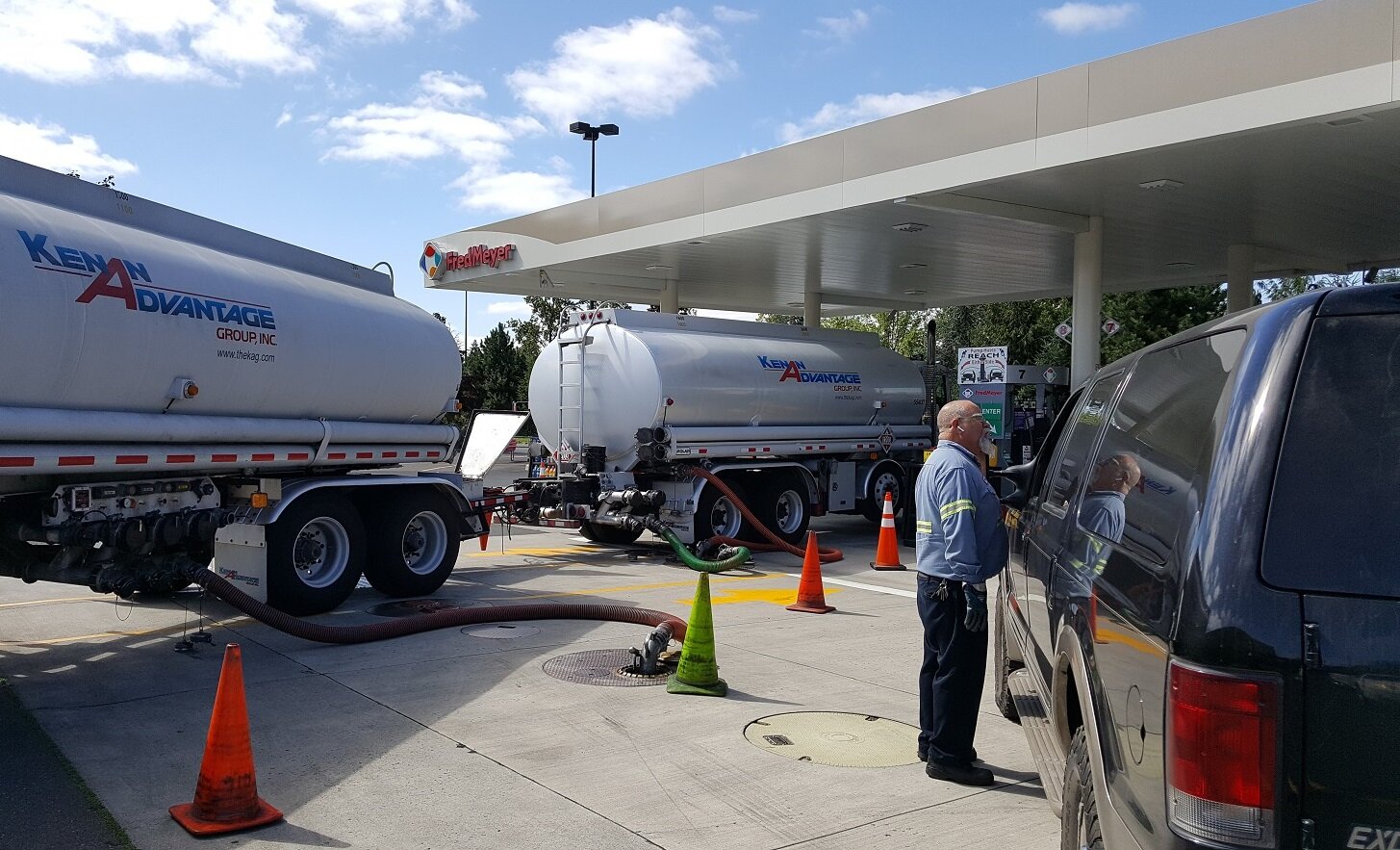
In November, Governor Kotek declared an emergency following an unexpected closure of the Olympic Pipeline, which delivers most of Oregon’s transportation fuels into the state. The emergency declaration supported alternate methods of distribution to maintain an adequate fuel supply. ODOE is the state’s lead response agency for fuel emergencies, coordinated by the Nuclear Safety and Energy Security division.
Response to the fuel emergency involved significant coordination among state agencies and external partners, including the Governor’s Office, Oregon Department of Emergency Management, Oregon Department of Energy, Oregon Department of Transportation, and Oregon Department of Environmental Quality, as well as private sector partners including the Oregon Fuels Association, the Olympic Pipeline Company, and other fuel companies. Following repairs to the Olympic Pipeline, Oregon's emergency ended on December 9.
The fuel emergency happened to coincide with a new Grounded podcast episode on energy resilience, including Oregon's response to fuel challenges. Host Katelyn Jackson was joined by ODOE Energy Security Manager Traci Naile and Mid-Columbia Economic Development District Energy and Project Manager Lindsay McClure. Give it a listen on our blog or your favorite podcast app.

Getting Grounded Podcast: Biomass
In Oregon’s past, biomass played a large role our daily lives: providing heat for homes, cooking, and for use in various industries. While the amount of Oregonians using wood for their primary heating source has decreased over time, biomass remains all around us – from Oregon’s forests to agricultural products to municipal waste.
On the latest episode of Getting Grounded, our energy fundamentals series of mini episodes, host Katelyn Jackson is joined by Michael Freels, ODOE senior policy analyst to discuss biomass.
The organic material from plants and animals can be burned for heat or converted to a biofuel for a variety of uses, including biogas, a renewable natural gas, and ethanol fuel. Listen on our blog or your favorite podcast app.
Reports from Around the Agency
Join our team! We are currently recruiting for a Chief Information Officer/IT Manager. Learn more on our website and please share with your networks.
Note to Oregonians: ODOE does not send employees or representatives for door-to-door visits in neighborhoods or communities. If an ODOE employee were to visit a property, they would schedule the visit in advance, identify themselves and their affiliation, and provide a photo ID badge as proof. Be sure to ask all unknown visitors to your home for clear identification. Please don’t hesitate to call us to confirm a visit if someone is claiming to represent our agency: 503-378-4040
In case you missed it, ODOE wrapped up celebrating 50 years of public service in December. Take a look back at some of the history we shared throughout 2025 on our blog.
In the fall, ODOE was proud to present the Oregon Energy Strategy, which includes pathways, policies, and recommended actions Oregon can take to meet the state’s clean energy policy objectives while addressing energy affordability and reliability. ODOE, peer agencies, and other partners are now turning to implementation of the strategy, including Governor Kotek's Executive Order 25-29. Follow along on our energy strategy website and sign up for email updates to stay in the loop!
ODOE has been developing a new strategic plan for the agency, which we expect to release later this winter. At a January 22 Energy Advisory Work Group meeting, ODOE’s strategic plan consultant presented 10 key takeaways from the input phase, including results from surveys, workshops, and interviews, and our team presented draft language for Strategic Plan pillars, goals, and actions. EAWG members discussed the draft language and provided helpful feedback. Materials from the meeting, including draft plan language and presentation slides, are available on ODOE’s website.
In December, Senior Clean Electricity and Markets Analyst Joni Sliger was invited to present to a graduate course at Portland State University, Northwest Energy Policy and the Columbia River. Joni enjoyed the opportunity do discuss data centers with students.
In mid-January, ODOE presented during Legislative Days, including a continuation of an Oregon Energy Strategy discussion from the fall, an overview of data centers in context of the energy strategy, and a presentation on fuel storage in the state.
On January 27, ODOE Director Janine Benner was pleased to serve as an opening speaker at the 2026 Energy Resilience for Local & Tribal Governments Workshop, hosted by Sustainable Northwest and Energy Trust of Oregon. Assitant Director for Nuclear Safety and and Energy Security Max Woods facilitated a plenary panel on County and Tribal Energy Resilience.
On January 28, Director Benner enjoyed an opportunity to speak on a panel during the Northwest Public Power Association's Data Center and Load Growth Summit. Janine's panel focused on "Policymakers' Balancing Act: Water, Land, Climate, Energy, and Economic Development" around data centers.
February is Black History Month and the Oregon State Library in Salem is hosting a special month-long exhibit about Letitia Carson, one of Oregon's first Black pioneers. Visit the library Monday-Friday from 8 a.m. and 5 p.m. and learn more online!
Did you know ODOE's Energy Facility Siting Team is currently reviewing more than a dozen proposed or amended energy facilities? From wind to solar facilities – to combined wind, solar, and storage facilities – you can learn more about the state's process and how to get involved on our website. You can also sign up to receive a monthly facility siting update showing the latest and greatest.
Oregonians can search for available renewable energy and energy efficiency incentive programs through ODOE’s Energy Hub for Incentive Programs and Projects in Oregon (Energy HIPPO!). Plug your address into the online calculator along with a few other basic pieces of information, and the tool will show the various programs you may be eligible for. The Energy HIPPO also provides other helpful resources for homeowners, renters, and contractors.
LOOKING AHEAD
Oregon Climate Action Commission | March 13, 2026 | Via Webinar
Energy Facility Siting Council | February 13, 2026 | Salem and Via Webinar
Current Rulemakings (click to see details)
Other Stakeholder Groups (click to see details)
Sign up to receive this newsletter by email.